Seven Cuts Worth Knowing: A Butcher's Case for Looking Past the Usual Suspects
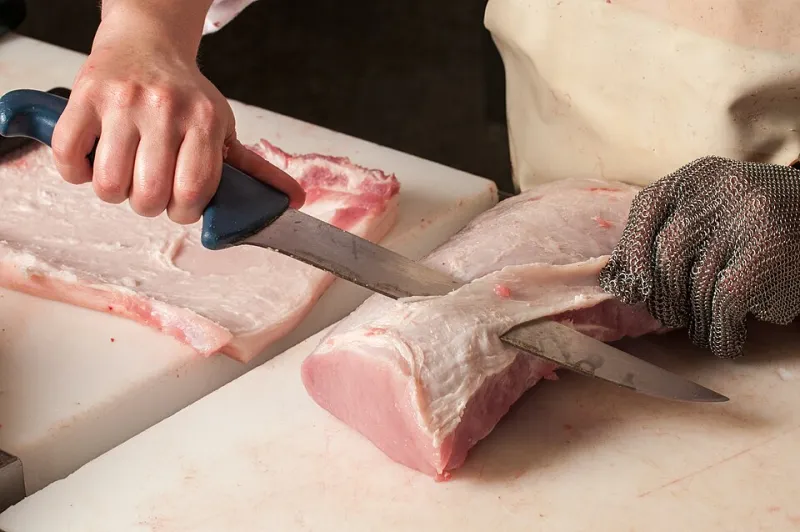
Photo: Ralf Roletschek, CC BY 3.0 de, via Wikimedia Commons
Every counter has its regulars. Chicken breast, sirloin, a nice piece of pork loin - reliable, familiar, and priced accordingly. But stand at the butcher's block long enough and you start to notice the quiet characters at the edges of the case: the darker, knobbly, oddly named cuts that cook up into something memorable.
Here are seven we would happily put on your table in 2026, with a note on what each one is and how to treat it.
1. Hogget - the sheep with a bit of history
Ask most shoppers to tell lamb from mutton and they will guess. Hogget is the middle ground: an animal between one and two years old, older than lamb but not yet mutton. The extra time on the hills gives it a deeper, rounder flavour and a touch more fat covering than spring lamb, which means it roasts beautifully without drying out.
Treat a hogget leg exactly as you would a leg of lamb - garlic, rosemary, a hot oven then a long, gentle finish - and expect a slightly firmer texture and a longer, savoury finish. Herdwick and other hill breeds are particularly good for this, and buying hogget supports farms that keep sheep on rough grazing all year round.
2. Ox cheek - the patient cook's reward
A cheek is exactly that. It is a hard-working muscle full of connective tissue, which sounds unpromising until you cook it slowly and it collapses into something glossy and beefy that puts many a steak to shame.
Brown it hard, then braise it for three hours in stout, stock or red wine with onions and a bay leaf. It also makes a superb pie filling and freezes well. Ask for it whole or diced; either way, it is one of the best-value beef cuts on the block.
3. Onglet - the butcher's secret
Also sold as hanger steak, the onglet hangs near the diaphragm and has a loose grain and a pronounced, almost iron-rich flavour. It is small - often enough for two - and it is not unknown for butchers to keep it for themselves.
Cook it fast over high heat, no more than medium-rare, then rest it and slice across the grain. There is a sinew running through the middle that you can either ask to have removed or simply cut around. Serve it with chips and something sharp, like a watercress salad.
4. Rabbit - lean, sweet and quick
Rabbit has fallen out of fashion in Britain despite being a traditional kitchen staple for centuries. It is lean, mild and slightly sweet, somewhere between chicken and pork in character, and it takes to mustard, cider and thyme as though born to it.
Joint it and brown in a casserole with bacon and shallots, or roast the saddle quickly and keep the legs for a slower braise. Because it is so lean, it benefits from a little added fat - a knob of butter, a few rashers, a splash of cream at the end.
5. Lamb breast - the thrifty roast
This is a flat, layered cut from the belly, streaked with fat and often sold rolled. Slow-roasting renders all that fat into something crisp and extraordinary on the outside, while the meat underneath stays soft and generous.
Score the skin, salt it well, and give it two and a half to three hours at a moderate heat, finishing hot to crisp the top. Pull the meat apart and serve with flatbreads, pickled red onion and a yoghurt sauce - or keep it British and pair it with minted peas and new potatoes.
6. Featherblade - the roast that thinks it is a braise
Featherblade comes from the shoulder of beef, a well-marbled cut that looks unpromising on the slab and eats like a dream. Cooked whole and slowly, it slices like a proper roasting joint at a fraction of the cost of rib.
Season it generously and roast it low for around three hours, or braise it in ale until it gives way under a spoon. Either way, the marbling does the work, and you end up with something juicy enough to serve to guests who think they are getting the expensive stuff.
7. Pigs' cheeks - small, rich, underused
Sold fresh, pigs' cheeks are little nuggets of dark, sweet meat that respond brilliantly to slow cooking. Brined and rolled, they become Bath chaps - a West Country classic that deserves a wider audience than it currently enjoys.
Try them braised in cider with apple and sage, or cooked long and low in a Spanish-style stew with paprika and chickpeas. They are inexpensive, they take kindly to big flavours, and they turn a plain plate of mash into something worth talking about.
Why the less obvious cuts are worth asking for
The pattern across all seven is the same: more flavour, less money, a bit of patience. These cuts ask you to cook a little differently rather than spend a little more, and they come from an animal that deserves to be used properly rather than cherry-picked. Buying this way is better for the farmer, better for the animal, and considerably better for your Sunday dinner.
Availability shifts with the seasons and with what the farms we work with are bringing through, so it is always worth a conversation at the counter. Tell us how many you are feeding and what sort of cooking you have in mind, and we will point you towards something you may not have considered before.