Beyond the Banger: Reading a Butcher's Sausage Counter Like a Pro
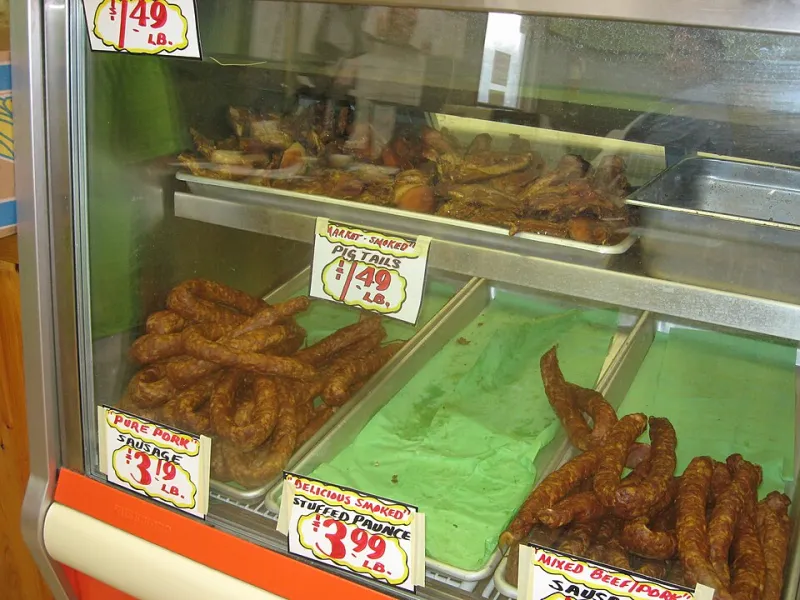
Photo: Southern Foodways Alliance, CC BY 2.0, via Wikimedia Commons
A butcher's sausage counter can be a quiet lesson in craft. On one side, neat rows of chipolatas. On the other, fat coils of Cumberland. Somewhere in between, a tray of something with apple and cider. The labels might say 'premium' or 'traditional'. That tells you very little. Here is how to read the counter without needing a food science degree.
Meat Content Is Only the Starting Point
In the UK, a sausage sold as a 'pork sausage' must meet a minimum meat content. But the number on the label is not the whole story. A sausage with 85 per cent meat can be dry and dense. A sausage with 65 per cent meat, good fat, and a little rusk can be juicy and well seasoned. The meat content includes fat, so a high percentage does not automatically mean a lean sausage.
Ask your butcher for the meat percentage and the fat percentage. A good fresh sausage often sits around 70 to 80 per cent meat, with 20 to 30 per cent fat. That fat is not a flaw. It carries flavour and keeps the sausage from turning to sawdust.
The Fat Question
Fat is the difference between a sausage that snaps and one that crumbles. Back fat is common. Some butchers use shoulder fat. If the sausage looks very pale and dry in the tray, it may be lean. If it looks glossy, that is a good sign. Do not be afraid to ask how much fat is in the mix. A butcher who makes sausages in small batches will know.
Rusk, Breadcrumb and Binder
Rusk is the unsung hero. It absorbs juices, gives the sausage a tender bite, and helps it hold together. Too much rusk and you get a bouncy, pasty texture. Too little and the sausage can split or feel crumbly. A range of 5 to 15 per cent is common. If you are gluten-free, ask what replaces the rusk. Rice flour and maize are used, but the texture will be different.
Casings: Natural vs Collagen
Natural casings come from sheep or pigs. They give that proper snap and they vary in thickness, which is part of the charm. Collagen casings are uniform and easier to produce. They can be perfectly good, but they sometimes have a tougher bite. Ask which casing is used. If you are making toad in the hole, a natural hog casing is a fine choice. For chipolatas, sheep casing is traditional.
Seasoning and the Story Behind the Sausage
A good sausage is seasoned with more than salt. Pepper, sage, nutmeg, mace, thyme, apple, leek, ale, or cider can all play a part. Regional styles matter: Cumberland is coarse and peppery, Lincolnshire leans on sage. Ask what is in the mix. Ask where the pork comes from. Ask if the sausages are made on site. If the answer is vague, that is useful information too.
Questions to Ask at the Counter
Try these, in this order:
- What is the meat percentage and the fat percentage?
- What percentage of rusk or breadcrumb is in the mix?
- Are the casings natural or collagen?
- Are the sausages made here, and what is in the seasoning?
- Do they contain gluten, sulphites, or other allergens?
- What is the best way to cook this particular sausage?
A good butcher will answer without flinching. They may even tell you which sausage they prefer for a fry-up and which one belongs in a casserole.
Red Flags on the Label and in the Tray
Be wary of labels that say 'butcher's style' but give no ingredient list. Look for a date mark and a price per kilogram. Check that the sausages are not sitting in a pool of liquid. Ask if they have been frozen. Ask how long they will keep. A fresh sausage should smell of seasoning and pork, not of old fat.
Cooking Them Properly
Sausages need gentle heat. A hot pan will split the casing before the middle is cooked. Start them in a pan over a low to medium heat, turning often. Or roast them at 180C for 25 to 30 minutes, depending on thickness. If you are grilling, keep them further from the coals. Cook pork sausages through until the juices run clear and no pink remains. Let them rest for a few minutes before serving. That goes for chipolatas too.
Do not boil them unless a recipe specifically asks. Boiling leaches flavour and gives the skin a flabby texture. If you are making toad in the hole, brown the sausages first, then add the batter. If you are making a casserole, brown them first as well.
The Local Craft Angle
At a proper butcher's counter, sausages are a small-batch product. The pork might come from a farm a few miles away. The seasoning might be mixed by hand. The casings might be natural. That is not nostalgia. It is a different way of making food, and it tastes different. Ask the questions. Read the tray. Choose the sausage that suits the meal, not the one with the loudest label.