The Cold-Weather Pork Counter: Collar, Belly and Rib Chops Worth Asking For
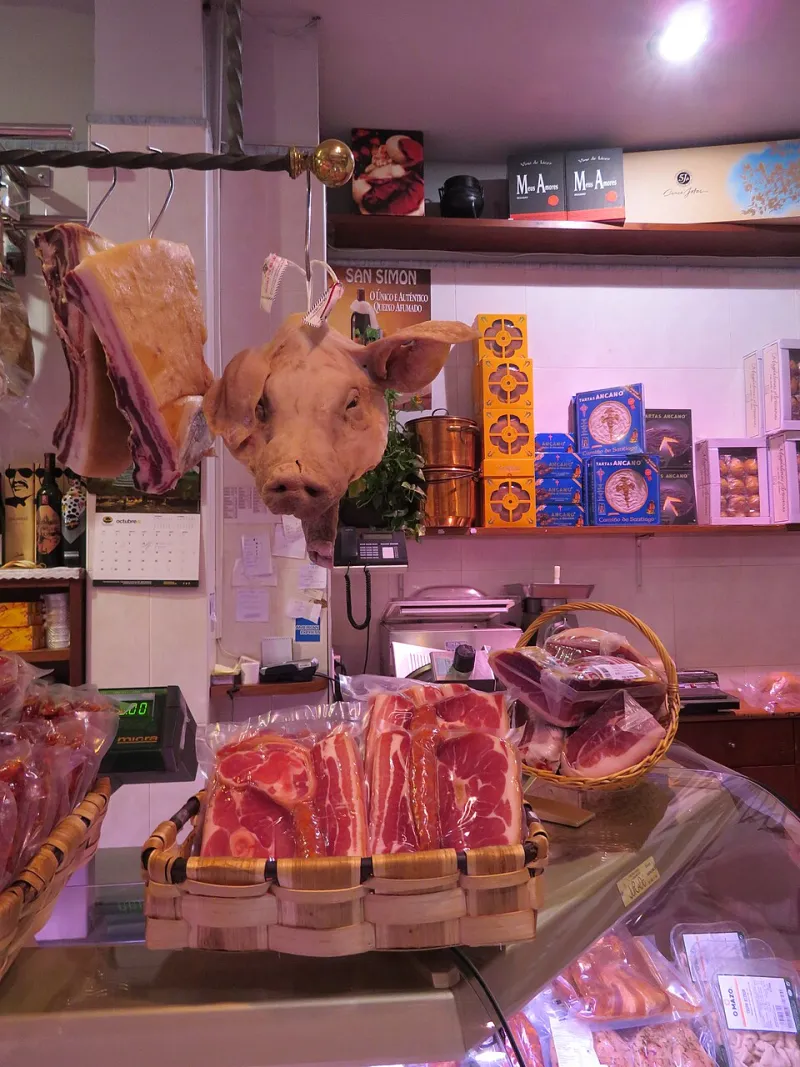
Photo: User:Rachel Dalby photographer, CC BY-SA 4.0, via Wikimedia Commons
Pork has a funny reputation in the UK. We happily order it in a pub, pile it onto a Sunday plate, and then too often buy the same safe joint at the supermarket week after week. Loin is fine. Tenderloin is fine. But winter is exactly the moment to look a little further along the counter.
Collar, belly, hand and spring, rib chops — these are the cuts that reward a slower approach, a hotter oven at the right moment, and a proper word with the person behind the glass. They are also the cuts that tell you most about how an animal was reared, because fat, colour and sinew all carry a story.
Start with the collar
Collar comes from the neck and shoulder end of the pig. It is a hard-working muscle, which is exactly why it tastes of something. You will see good marbling running through it, a decent cap of fat, and enough connective tissue to keep it juicy over a long roast.
Ask for it boned and rolled, tied neatly, with the rind left on if you want crackling. A collar joint is forgiving in a way that lean loin is not. It will sit happily in a low oven with cider, Bramley apples and a few bay leaves, or be sliced thick for a slow braise with mustard and stock. Cooked long enough, it pulls apart into something close to pulled pork, but with more structure and a deeper flavour.
At the counter, be clear about size. A two-kilo collar joint feeds a family with leftovers; a smaller one is better for a midweek roast. If you are braising rather than roasting, ask for it cut into large chunks — collar is excellent for stewing and for a coarse mince if you are making ragu or sausages at home.
Belly is not the cheap option
Belly has had a revival, but it still gets treated as the budget cut. That is unfair. A good piece of outdoor-reared belly, with the ribs left in or taken out, is one of the most useful things you can put in the oven. The fat renders slowly, the meat stays soft, and the rind — if it has been scored properly — turns into crackling worth arguing over.
When you buy belly, ask for the rind scored finely and evenly. If the skin is damp, dry it in the fridge overnight before roasting. Salt it well, start it hot, then drop the heat and let it take its time. Belly also suits braising with fennel, chilli and white wine, or being cubed for a winter stew. Boneless belly slices are handy for the grill, but for a Sunday traybake ask for a whole piece rather than thin rashers.
One practical point: belly shrinks. Buy more than you think you need, especially if you want cold leftovers for sandwiches the next day.
Hand and spring: the shoulder by another name
Hand and spring is the shoulder — the front leg and the bit above it. It is a traditional British cut, and it is criminally underused. You will sometimes see it boned and rolled, sometimes on the bone. Both are good. The bone gives flavour and helps the joint hold its shape; boned and rolled is easier to carve.
Shoulder is the cut for pulled pork, for slow-roasted Sunday joints, and for the sort of winter pie filling that makes a grey afternoon feel less grey. Ask for it with a good fat covering and not trimmed too lean. If you are making sausages, hand and spring is a classic choice because the fat-to-lean ratio is right.
At our counter, we are happy to bone, roll and tie a shoulder while you wait, or cut it into chunks for stewing. Just say what you are cooking and roughly how many you are feeding. It sounds obvious, but it saves a lot of guesswork.
Rib chops and the Sunday chop
Rib chops come from the loin, but they are not the same as a neat, lean loin steak. A good rib chop has a bone, a decent rim of fat, and enough thickness to cook properly. Ask for them cut around two and a half to three centimetres thick. Anything thinner will dry out before it has a chance to brown.
These are the chops for a hot pan, a little oil, and a short rest. Season them well, cook them until they are just done, and let them sit for five minutes before serving. A sharp apple sauce or a mustard and cider sauce is all they need. If you want crackling with chops, ask for the rind left on and scored — it will crisp in a hot oven, though it needs watching.
Rib chops also take kindly to a brine or a dry rub if you are cooking them for the freezer or a weekend lunch. But keep it simple. Good pork does not need much help.
What to ask at the counter
A few questions will get you a better piece of meat than any recipe can:
- Is the rind scored, and can it be scored more finely?
- Is the joint boned and tied, or would you recommend keeping the bone in?
- How much fat is left on, and can it be trimmed to a particular depth?
- Are these chops cut to a thickness I can cook evenly?
- Is this British, and can you tell me which farm or county it came from?
You do not need to ask all of them every time. But asking one or two shows you are interested, and a good butcher will respond in kind.
Labels worth questioning
Pork labelling can be a maze. Red Tractor is a farm assurance scheme; RSPCA Assured looks at welfare standards; outdoor-reared and free-range mean different things depending on the farm. Breed labels — Gloucester Old Spot, Middle White, Saddleback — tell you something about flavour and fat cover, but they are not a guarantee of welfare on their own.
The useful question is not just what the label says, but what it means for the pig. Was it outdoor-reared? How was it fed? How old was it at slaughter? A butcher who can answer those questions is worth listening to. At John Stewart Butchers, we would rather have that conversation than let a sticker do all the talking.
A winter counter, not a summer one
Winter pork is about warmth and time. Collar for a slow roast, belly for crackling and leftovers, hand and spring for pulling apart, rib chops for a quick supper when the day has got away from you. None of these cuts are difficult. They just ask you to buy with a bit of thought and cook with a bit of patience.
So next time you are at the counter, look past the loin. Ask what else is good. The answer will usually be something with a bit more fat, a bit more flavour, and a lot more to say for itself.