The January Brisket: A Crowd-Feeding Cut That Still Feels Like a Treat
By the time the first weekend of January comes around, most of us have had our fill of fancy. The fridge has been through its annual workout, the cheese board has lost its appeal, and yet there is often a houseful again — or at least a table of people who would rather be fed properly than talked into another salad. This is where brisket earns its keep.
It is not a quick cut. It is a generous one. Cooked with patience, a good piece of brisket gives you soft, deeply beefy meat, a glossy jus and enough leftovers to make the rest of the week feel like a bonus rather than a chore. It also happens to be one of the better-value joints on the counter, which matters in a month when the bank statement arrives with a thud.
Why brisket suits the post-Christmas table
A rib of beef or a prime roasting joint is a wonderful thing, but it is not the only way to put something celebratory in the middle of the table. Brisket has a different kind of generosity. It asks for time rather than money, and it rewards that time with flavour that spreads through the whole kitchen.
At our counter, we like brisket for a crowd because it is forgiving. You do not need to baby it every ten minutes. You need a decent joint, a sensible oven temperature and a little forward planning. The result feels like a proper lunch, even if the guests are in jeans and the Christmas china has gone back in the cupboard.
Flat, point and the whole thing
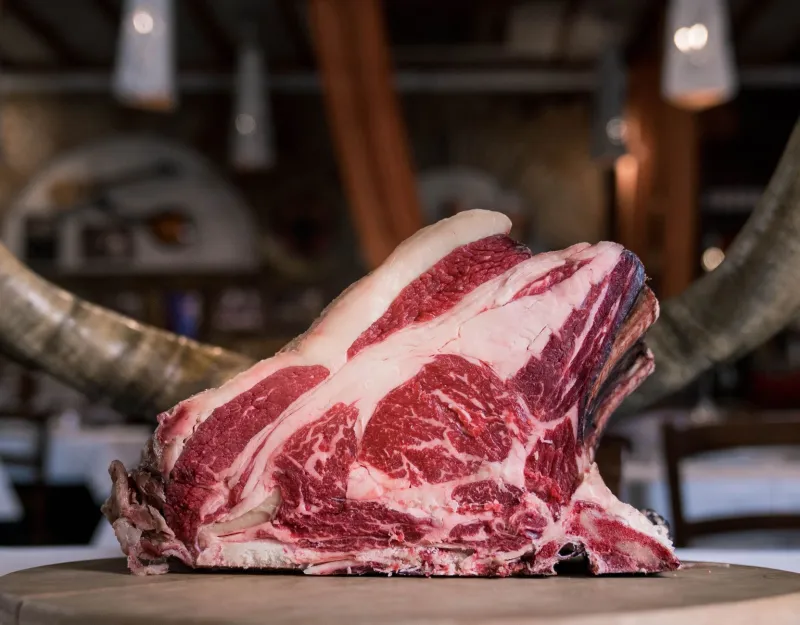
Brisket comes from the chest of the animal, and it is made up of two main muscles. The flat is the leaner section. It slices neatly and looks tidy on a plate, but it can dry out if it is cooked hard or carved too soon. The point sits on top and carries more fat and connective tissue. It is the part that goes soft and pull-apart, with a richer, more unctuous texture.
A whole brisket, often called a packer, gives you both. It is a big piece of meat and needs a big tin, but it is the classic crowd-feeder. Many butchers will also sell the flat or the point on its own, or a rolled brisket tied for roasting. If you are feeding six to eight people and want leftovers, a point or a small whole brisket is a good place to start. If you want clean slices for sandwiches, ask for the flat and keep an eye on it in the oven.
The fat cap question
There is a lot of advice about fat caps, and most of it is more complicated than it needs to be. You want a thin, even layer of fat on top — enough to baste the meat as it cooks, not so much that you are paying for a layer of suet. Ask the butcher to leave a neat cap rather than trimming it all away. If it is very thick, they can take it down for you.
Scoring the fat lightly with a knife helps it render and gives the rub somewhere to sit. If the joint is rolled and tied, ask for the string to be left on until after cooking; it holds the shape together while the meat softens.
Salt first, then time
A dry salt is the simplest trick in the book. Weigh the joint, then use roughly 1.5 to 2 per cent of its weight in fine salt. For a 2kg brisket, that is about 30 to 40g. Rub it all over, put it on a rack over a tray and leave it uncovered in the fridge. Overnight is ideal. A full day is fine. An hour before cooking is better than nothing.
The uncovered spell is important. It dries the surface slightly, which helps the meat brown rather than steam. If you are cooking with a salty stock or adding salted butter later, hold back a little on the extra salt. You can always add more at the table.
A low-and-slow oven method that behaves
Preheat the oven to 140C fan or 160C conventional. Put the brisket in a roasting tin on a bed of sliced onions and carrots. Add stock to come about a centimetre up the sides — not a bath, just a humid layer. A splash of ale or dark beer is a good addition if you have it, but water and a bay leaf will do.
Cover the tin tightly with foil or a lid and cook for four to six hours, depending on size. A 2kg joint will usually be ready somewhere around the four-hour mark; a larger one will take longer. You are looking for meat that gives way when you push a fork into the thickest part, not meat that is still resisting. If you want a darker top, uncover for the last twenty to thirty minutes and turn the oven up to 180C fan.
Let it rest for at least half an hour before carving. This is not a suggestion to skip. The juices need to settle back into the meat, and the joint will be easier to slice. Cut across the grain, not along it, and keep the cooking liquid warm for gravy.
What to ask at the counter
Start with the number of people. As a rough guide, allow 300 to 350g of raw brisket per person if you want leftovers, and around 250g if you do not. Brisket shrinks noticeably, so a joint that looks enormous raw will not seem quite so enormous on the plate.
Ask whether it is flat, point or a whole piece. Ask for an even thickness if possible, and for the fat cap to be left at a sensible level. If you are unsure about cooking times, say so. A good butcher will give you a starting point rather than a lecture. And if you are feeding a crowd, order ahead. January may be quieter than December, but brisket is not a cut every shop keeps in abundance.
Leftovers with a second act
This is where brisket really pays you back. Cold slices are excellent in a toastie with mustard and pickles. Shredded meat can go into a ragu, a chilli or a Monday pie with a mashed potato lid. Chopped brisket and leftover potatoes make a proper hash, especially with a fried egg on top.
Do not throw away the cooking liquid. Skim the fat, warm it through and use it as a base for gravy or to moisten the leftovers. It is full of the flavour you paid for.
Brisket is not a compromise on a celebration. It is a different kind of treat: slower, cheaper, and built for a table with too many chairs pulled up to it. Choose it carefully, give it time, and the first weekend of January can feel like a proper occasion all over again.