Time, Air and Beef: Making Sense of Dry-Aging Labels at the Counter
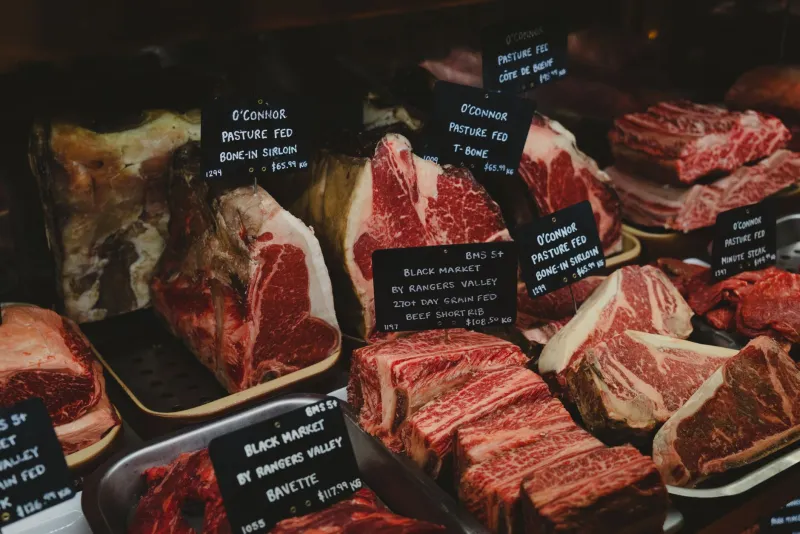
Dry-aged beef has a way of making a butcher's counter feel like a wine list. The labels promise depth, character and something worth paying extra for, but the numbers can be more confusing than useful. Twenty-eight? Thirty-five? Sixty? Here is what those days actually do, and how to choose without buying hype.
Dry aging is controlled drying, not just hanging about
At its simplest, dry aging is a controlled process. Beef is held in a cool room with steady temperature, humidity and airflow. Moisture leaves the meat, and natural enzymes get to work on proteins and fats. The result is a more concentrated flavour, a different texture and a darker outer surface that has to be trimmed away before sale.
That is why dry-aged beef costs more. You are paying for beef that has shrunk, and for the crust that gets cut off. You are also paying for time and space in a controlled room. None of that is automatically better, but it does explain the price gap between a dry-aged steak and a standard supermarket pack.
28 days: the approachable end of the scale
Twenty-eight days is often the entry point. The flavour is noticeably nuttier and more savoury, but it rarely shouts. The texture can feel a little firmer and more interesting, though it should not be tough. If you have never cooked dry-aged beef at home, this is a sensible place to start.
A 28-day label is not a guarantee of quality. The animal, the fat cover and the conditions in the aging room all matter. A well-aged 28-day sirloin from a careful butcher can be more enjoyable than a 60-day steak that has been aged badly or trimmed too aggressively.
35 days: deeper flavour, more trim
At 35 days, the savoury notes step forward. You may notice a gentle tang or a more pronounced aged flavour, especially on a ribeye or a bone-in sirloin. The beef tastes older in the best sense: deeper, rounder and more complex.
Expect more moisture loss and a thicker trim, so the price per usable kilo rises. That is not a con trick; it is the nature of the process. Ask whether the price is for trimmed weight. A butcher who can answer that clearly is usually a butcher who knows the product.
60 days: a different beast
Sixty days is not simply more of the same. Flavour can become intense, almost blue-cheese-like for some palates, and the crust is thick. There is more shrink, more trim and a higher cost per usable cut. It can be magnificent as a steak, but it is not the everyday choice.
Do not buy the biggest number because it looks serious. Buy it because you like the sound of the flavour. If you are cooking for a table with mixed tastes, a 35-day ribeye is usually the safer crowd-pleaser.
Which cuts earn their time?
Fat cover and bone help. Ribeye, sirloin, rump and bone-in fore rib are the classic candidates because they have enough fat and structure to handle the process. Lean fillet can dry out, and while some butchers age whole fillet carefully, it is not automatically the best use of money. Thin steaks and stewing cuts gain less from dry aging.
Dry-aged trim can make excellent mince, but do not pay fillet prices for a burger. If a menu promises a dry-aged burger, ask what cut and what trim went into it. The label can be true and still not mean much.
Reading the counter, not just the label
Ask a few plain questions. Was the beef aged here or bought in pre-aged? Was it aged as a whole primal or as cut steaks? How many days from when? What temperature and humidity? Is the price for trimmed weight? A proper dry-aged steak should smell clean and savoury, not sour. The surface may be darker, but the cut face should look fresh. The fat should be creamy, not grey.
If the person behind the counter cannot tell you, treat the label with caution. Wet-aged beef in a vacuum pack is still aged, but it is not dry-aged. The two processes give different results and should not be sold as the same thing.
Cooking it with confidence
Pat the steak dry, salt it, and cook it over a decent heat. Dry-aged beef has less water, so it can go from perfect to dry faster than a standard steak. Use a thermometer, aim for the doneness you actually like, and rest it properly. Serve it simply. A dry-aged steak does not need a sauce that hides the flavour you have paid for.
For a roast, keep the cooking gentle and give it time to rest. The point is to warm the beef through without driving out the moisture it has left. Slicing against the grain helps too.
The bottom line
Day count is a style, not a score. Twenty-eight and thirty-five days are usually the sweet spots for home kitchens. Sixty days is a treat for people who know they enjoy the intensity. Buy from someone who can explain the process, and cook it with a little care. At John Stewart Butchers, we would rather sell you a 35-day sirloin you love than a 60-day label you regret.