The Stewing Steak Problem: Choosing Beef for the Pot With Your Eyes Open
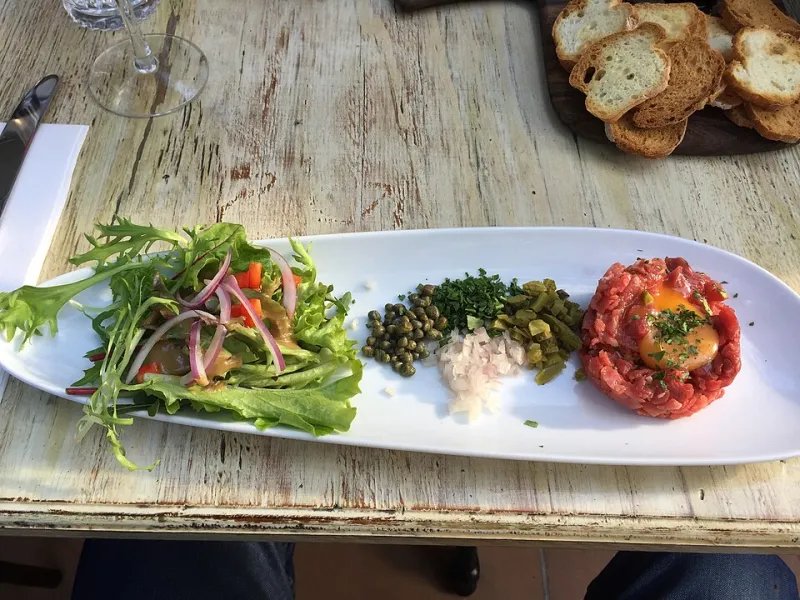
Photo: Chris Olszewski, CC BY-SA 4.0, via Wikimedia Commons
Few phrases cause more quiet trouble in a butcher's shop than 'stewing steak'. It sounds straightforward, and it is the kind of line a recipe drops in without a second thought. But the phrase describes a job rather than a cut, and what you get depends entirely on who is doing the cutting and what happened to be on the block that morning.
Why the pre-cut tub is a lottery
Walk into most supermarkets and the cubed beef in the chiller is a mixture: shin, neck, shoulder trim, maybe some leg, all cut to roughly the same size and packed together. The problem is that these muscles do not behave alike. Some are laced with connective tissue that turns to gelatine and gives you a glossy, spoonable stew. Others are leaner and coarser, and given the same cooking time they go stringy while their neighbours have already collapsed. Add in the fact that cube size is often too small, so the pieces overcook before the sauce has come together, and you can see why one stew is a triumph and the next is a chewing exercise.
What braising actually needs from a cut
Braising works because collagen, the tough protein that wraps muscle fibres, slowly converts to gelatine somewhere between 70C and 90C in the presence of moisture. That takes time, and it takes a temperature that stays below a boil. Push the pan too hot and the fibres contract, squeezing out moisture faster than the fat and gelatine can compensate. So the ideal braising cut is well worked, marbled with fat, riddled with connective tissue and cut into pieces large enough to survive a couple of hours. Three to four centimetres is a sensible target for most stews; bigger if you are cooking a single joint.
Chuck: the dependable all-rounder
Chuck comes from the shoulder, which does a lot of work, and it shows in the flavour. Look for chuck and blade, or ask for whole chuck to cut yourself. It has enough internal fat to keep the sauce rich and enough collagen to give body, and it pulls into tender strands without falling apart. Expect two and a half to three hours at 150C in a covered pot. It is the cut to reach for when a recipe is vague, and it makes a decent pie filling once the sauce has reduced.
Shin: the one with the wobble
Beef shin is the leg, cut across the bone or off it, and it is the most generously gelatine-rich cut on the counter. That is why a shin stew sets to a jelly in the fridge and tastes so much deeper the next day. Bone-in shin, cut thick, is the classic for a slow braise with a risotto or a pile of mash. Give it three to three and a half hours. It holds its shape beautifully until the moment you press it with a spoon.
Clod: the quiet bargain
Clod is shoulder again, from further along, with a coarser grain and a bigger price advantage. It is less fashionable than chuck and that is your gain. Cut into larger chunks, it takes two to two and a half hours and is at its best shredded rather than served in neat pieces — think ragu, pasties, a slow-cooked sandwich filling. Ask for it in one piece if you want to control the size yourself; it is easier to cut cold.
Cheek: the softest thing on the counter
Beef cheek is small, dark and dense, and it cooks into something almost spoonable. Because the pieces are modest, cook them whole and portion afterwards, or they will disintegrate before they are ready. Three to four hours at a low temperature, and be prepared for a fair amount of shrinkage. The reward is a texture no other cut quite matches. Cheeks are often sold frozen or ordered in, so give your butcher a few days' notice.
What to ask for at the counter
Be specific. Ask for braising steak cut from chuck, in pieces about three centimetres, with the fat left on and not trimmed to bare lean. Ask for it cut to order rather than pulled from a tub. If you want shin, ask for it thick-cut and on the bone, and ask them to saw it cleanly so you get even pieces. Ask how long the beef has been hung, and whether the cut is from a native breed or a dairy-cross animal — both are fine, but they behave differently and it is useful to know which you have.
If a recipe says stewing steak and nothing more, the safe answer is chuck. If you want the sauce to have real body, mix chuck with a third shin. And if the butcher offers you bones for the pot, take them; a couple of marrow bones under the surface will do more for the gravy than any stock cube.
Quantities, times and temperature
Allow 250 to 300g of raw meat per person, more if the cut is bone-in, and expect roughly a third of the weight to disappear in shrinkage and trim. Brown in batches and do not crowd the pan. Cook covered at 140–150C, or at a bare simmer on the hob, and check at the earlier end of the range — an extra half hour rarely hurts, but an hour too many turns everything to mush.
Finally, salt the meat a few hours ahead if you can, and leave it uncovered in the fridge. It seasons through, helps the surface brown and gives the finished dish a rounder flavour. Small effort, noticeable result.