The Art of the Counter Chat: Getting the Cut, Trim and Thickness You Really Want

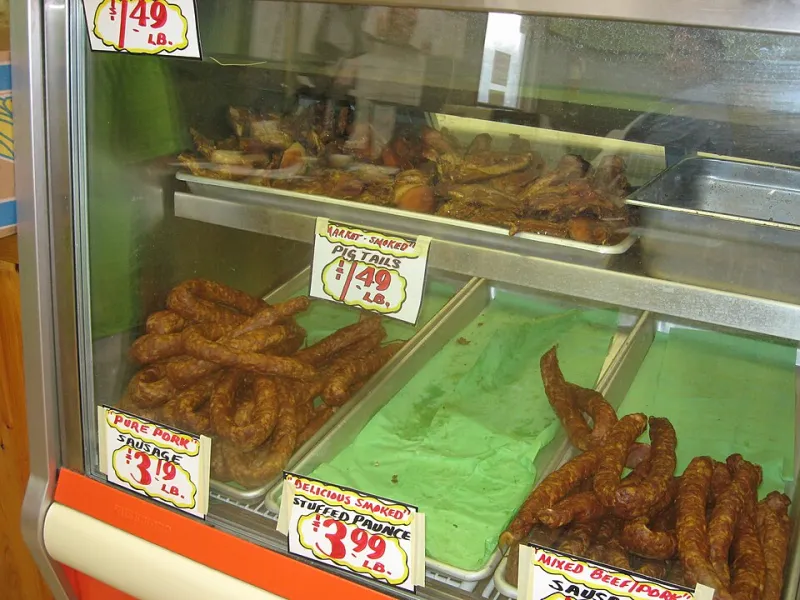
Photo: Robin Wauters, CC BY 2.0, via Wikimedia Commons
There is a particular kind of shopper who approaches a butcher's counter the way they approach a self-service till: eyes down, order ready, no eye contact. We understand. The queue is long, the names are unfamiliar, and nobody wants to be the person holding up Saturday morning with a question about hanging time.
But here is the thing: the counter is not a vending machine. It is a conversation, and the conversation is the product. You are not just buying a piece of meat; you are buying the butcher's knowledge of how to cut it, trim it, tie it and cook it. The more you tell us, the better we can do that.
The Counter Is Not a Vending Machine
Supermarkets have trained us to buy by label. The label tells you the cut, the weight and the price. It does not tell you the breed, the farm, the hanging time, the fat cover or whether the piece will work in the pan you have in mind. That is not a criticism of labels; it is just the limit of them.
A butcher's counter works differently. You can point at a piece and ask what it is. You can ask for it to be cut thicker. You can ask for the bone to be left in or taken out. You can ask for a joint tied a certain way. None of this is a special favour. It is the job.
The Questions That Actually Help
The best questions are specific. 'What would you recommend for a slow roast?' is fine, but 'I have a 2kg piece of beef and four hours — what should I buy?' is better. 'Is this good?' is fine, but 'Is this hung long enough for roasting, or is it better braised?' is better.
Here are the questions we hear most often, and the ones we wish more people asked:
- What breed is this, and where was it raised?
- How long has it been hung?
- What is the fat cover like, and will it render down?
- Can you cut this thicker or thinner?
- Can you trim it for me, or leave the fat on?
- Is this piece better roasted, braised or grilled?
- How many will this feed, realistically?
You do not need to ask all of them. One or two will do. The point is to give the butcher something to work with beyond a weight and a price.
Breed, Farm and Hanging Time: Ask Without Feeling Awkward
Some people feel awkward asking about breed or hanging time, as if they are trying to catch the butcher out. We do not see it that way. A good butcher is proud of those details. If the beef is from a native breed, we will tell you. If it has been hung for 28 days, we will tell you. If it has not, we will tell you that too, and we will tell you what it is best used for.
Hanging time is not a competition. A long-hung steak is not automatically better than a short-hung one; it depends on the animal, the fat cover and what you are cooking. What matters is that the butcher knows and can steer you. Ask the question, listen to the answer, and use it.
Thickness, Trim and Size: Be Specific
This is where a butcher's counter leaves the supermarket for dead. You can ask for a steak cut two inches thick, or a joint boned and rolled to fit your tin. You can ask for the fat left on a pork chop or taken off a leg of lamb. You can ask for a chicken spatchcocked, a shoulder cubed for stew, or a piece of beef tied for roasting.
Be specific about what you are cooking. 'I want a roasting joint' is less useful than 'I want a joint for two that will fit in a small oven and carve easily'. 'Some steaks' is less useful than 'two steaks, about 250g each, cut thick enough for the pan'. The more detail you give, the less guesswork there is.
Say Your Budget Out Loud
People are shy about budget. They should not be. If you have £15 to spend on a Sunday roast, say so. We can work with that. We might suggest a shoulder rather than a leg, or a smaller joint with more fat, or a different cut altogether. What we will not do is sell you something that does not fit your budget and then watch you struggle with it.
Budget is not a dirty word at a butcher's counter. It is information. The best value is not always the cheapest item; it is the piece that suits your cooking, your numbers and your wallet.
What to Do When You Are Not Sure
Ask. That is the whole answer. If you do not know the difference between a loin chop and a chump chop, ask. If you do not know whether to roast or braise a piece of beef, ask. If you are cooking for six and have no idea how much meat to buy, ask. We would rather spend two minutes explaining than have you take home the wrong thing.
What We Do With Your Answers
At John Stewart Butchers, the conversation is how we match the cut to the customer. If you tell us you are cooking a ragu for four and you want it to taste of something, we will point you towards a coarse grind with a bit of fat. If you tell us you are roasting for a crowd and you want leftovers, we will suggest a larger joint and tell you how to cook it. If you tell us you are on a tight budget, we will find you the best piece for the money.
That is not a sales technique. It is just good butchery. The counter is where the knowledge lives, and the knowledge is free.
The Only Silly Question Is the One You Do Not Ask
You do not need to be an expert to shop at a butcher's counter. You just need to be willing to have a conversation. Ask about the breed, the farm, the hanging time, the thickness, the trim, the budget. Ask what the butcher would do. Ask again if the answer did not land. The worst that happens is you learn something. The best that happens is you go home with exactly the cut you wanted, cooked the way you meant to cook it.