Ask for the Fat: Fresh Suet and the Winter Puddings It Still Makes Better
On a cold Saturday in November, the sort of morning when the windows steam up before the queue has even formed, fresh suet is rarely the first thing a customer asks for. It is not sitting in the display cabinet next to the chops. It is not labelled with a cheerful little card. More often it is in the back, wrapped and waiting, because the butcher knows that the people who want it tend to ask in a quiet, knowing way.
That is a shame, really. Suet is one of the oldest working ingredients in British home cooking, and it does a job that few modern substitutes manage quite as well. It is also a useful way to use up good fat from good animals, which sits comfortably with the whole idea of buying meat with a bit more care and a bit less waste.
The fat that sits behind the kidney
Suet is the hard, crumbly fat found around the kidneys and along the loins of beef and lamb. Beef suet is the more common choice for puddings and dumplings, though lamb suet has its own place in some regional recipes. At the counter you may hear it called kidney fat, which is a fair description of where it comes from rather than a different ingredient altogether.
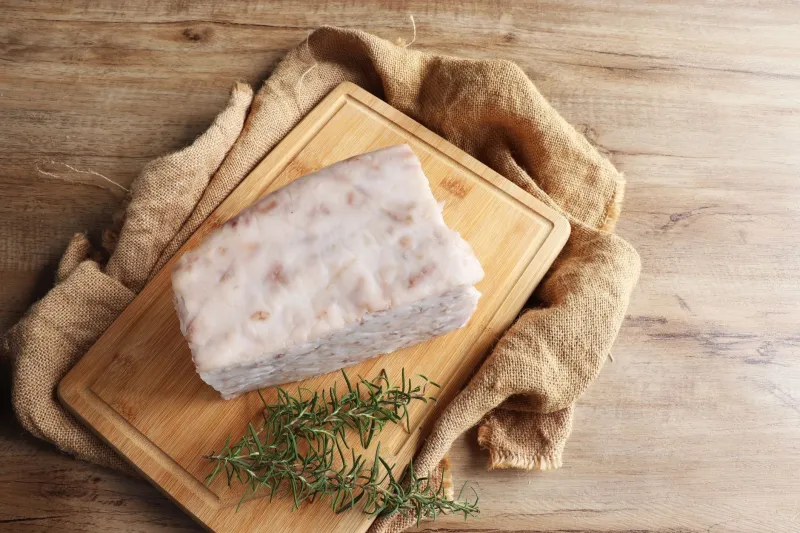
It is not the same as dripping, which is rendered fat from a roast, and it is not the same as tallow, which has been melted down and clarified. Fresh suet is raw. It is pale, firm and slightly waxy, and it grates into soft strands rather than smearing into a paste. That texture is the point. When it melts during cooking, it leaves little pockets in the dough, which is why a suet crust can be both tender and sturdy at the same time.
Packet shredded suet has its uses, and plenty of good cooks keep a box in the cupboard for emergencies. But it is usually mixed with flour to stop it clumping, and some versions contain other fats or stabilisers. Check the label if you are unsure. Fresh suet tastes cleaner and richer, and it gives a more open, less close-textured result. It is not a luxury ingredient. It is just a proper one.
Why it earns its place in the winter kitchen
Suet has a high melting point, which makes it well suited to long, slow cooking. A steamed pudding made with fresh suet holds its shape and keeps a lovely moist crumb without turning dense. Dumplings made with it sit in a stew for half an hour and come out light rather than leaden. And in a jam roly-poly, it gives that familiar soft, slightly spongy roll that soaks up custard without collapsing.
There is a flavour point too. Good suet carries the savoury notes of the animal without tasting overwhelmingly beefy. It supports onion, thyme, bay, black pepper and stout in a steak pudding. It lets the jam do the talking in a roly-poly. It is a background ingredient in the best sense: it makes everything around it taste more like itself.
How to ask at the counter
The simplest approach is to ask directly: “Do you have any fresh beef suet, or kidney fat you could prepare for me?” A butcher who breaks down whole carcasses is more likely to have it than one who only buys in boxed cuts, so it is worth asking even if you do not see it on display. If they do not have it that day, they can often keep some back for you next time.
You can ask for it whole or minced. Whole is more flexible, because you can grate it yourself and keep the rest in the freezer. Minced is convenient if you are making dumplings in a hurry. If you are buying whole suet, ask the butcher to remove any membrane or bloody patches. A good counter will do this without making a fuss.
It also pays to ask where the beef came from. Suet from a grass-fed native breed will often be a deeper yellow than suet from a grain-fed animal, and the flavour can be slightly fuller. That is not a rule, just a useful thing to notice. Provenance matters here as much as it does with a rib of beef or a leg of lamb.
Storing it without overthinking it
Fresh suet keeps in the fridge for two to three days if it is well wrapped. For longer storage, freeze it in small portions. Grate it first if you can, then freeze it in 100g bags. That way you can take out exactly what you need for a pudding or a batch of dumplings without defrosting the whole lot.
Keep everything cold when you use it. Warm suet softens and clumps, which makes it harder to rub into flour. If your kitchen is warm, chill the grated suet for ten minutes before you start. A little flour on the grater helps stop it sticking, though it is not essential.
Three puddings worth the effort
Dumplings
For a stew that needs something substantial on top, mix 100g fresh suet with 200g self-raising flour and a pinch of salt. Add enough cold water to bring it together into a soft dough, then stir through chopped parsley or thyme. Drop spoonfuls onto a simmering stew, cover with a lid and cook for about 25 minutes. The suet keeps them light but sturdy, and they soak up gravy beautifully.
Steak and kidney pudding
This is the classic test of a suet crust. Use 300g self-raising flour, 150g fresh suet, a pinch of salt and enough cold water to make a firm dough. Line a pudding basin, fill with diced chuck steak and prepared kidney, onion, a little stock and plenty of black pepper, then top with a suet lid. Steam for three to four hours. The crust should be tender on the inside and slightly firm on the outside, not soggy. Fresh suet makes that texture much easier to achieve.
Jam roly-poly
Spread suet dough with good raspberry or blackberry jam, roll it up, wrap it loosely in parchment and steam it until it is soft and cooked through. Serve with custard. It is plain, old-fashioned and deeply comforting, and it is exactly the sort of thing that makes a winter kitchen feel worthwhile.
A small habit worth reviving
Suet is not fashionable, and it is not supposed to be. It is a practical ingredient with a long history, and it happens to make some of the best cold-weather food in the British repertoire. Asking for it at the counter is a small way to keep that knowledge alive, to use more of the animal well, and to make a better pudding at the same time. In November, with the nights drawing in, that seems like a fair trade.