Salt, Time and a Cool Shelf: Home-Cured Bacon for First-Timers
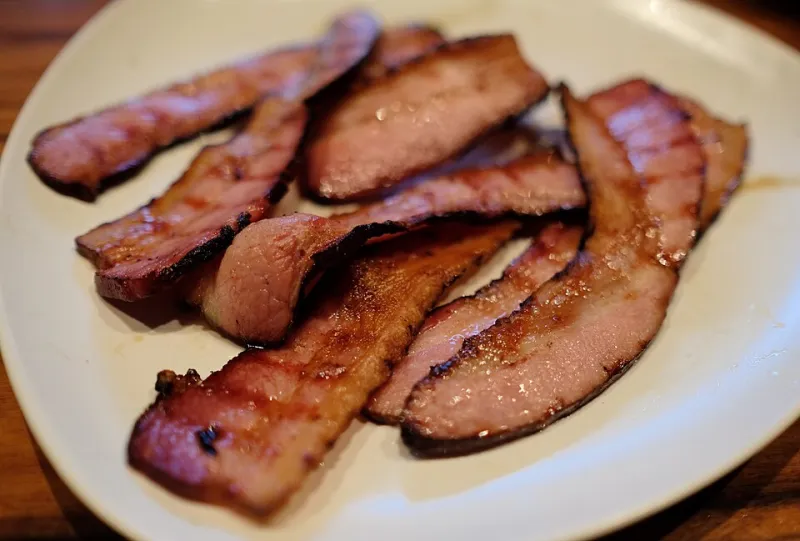
Photo: Lars Plougmann from United States, CC BY-SA 2.0, via Wikimedia Commons
Bacon is one of those things that sounds like a project until you actually do it. A piece of pork belly, a measured amount of salt, a cool shelf and a few days of waiting: that is the whole idea. The trouble is that most first attempts go wrong in predictable ways. Someone guesses the salt, rushes the cure, or leaves a warm-ish dish at the back of a crowded fridge and hopes for the best. None of that is necessary. Home-cured bacon is very achievable, but it rewards a bit of care and a butcher who will point you at the right cut.
Start with a piece of pork that wants to be bacon
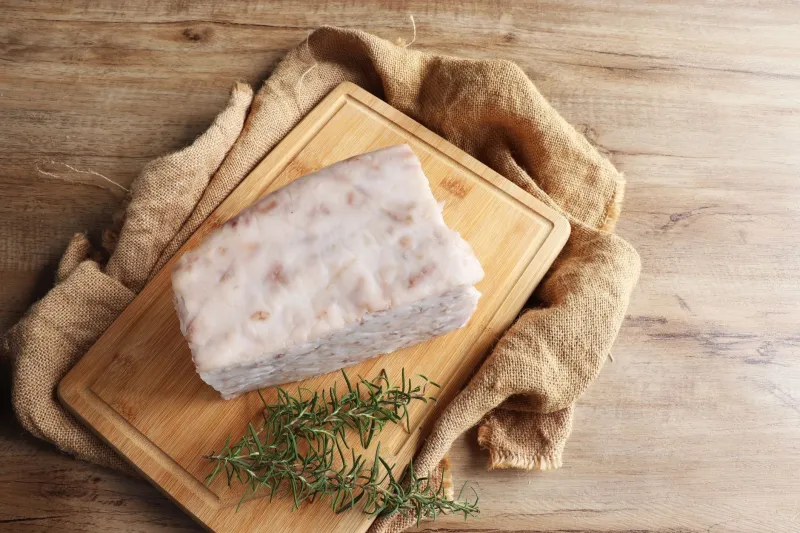
At the counter, ask for boneless pork belly with a good, even layer of fat and no wobbly thin patches. A piece around 1kg to 1.5kg is a sensible first batch: big enough to slice properly, small enough to fit in a dish and cure evenly. Skin off is easier for beginners, though some people leave the rind on for a firmer slice and crackling later. Either is fine. What matters more is uniform thickness. A belly that is 4cm at one end and 2cm at the other will cure unevenly, and you will spend the rest of the week trying to work out which end is done.
If you want a leaner bacon, ask for boneless loin with its fat cap left on. It makes lovely back bacon, but it is a different beast: denser, slower to cure and less forgiving if you over-salt. For a first go, belly is the friendlier teacher. Ask for outdoor-reared pork if you can. The flavour is better, the fat behaves better in the pan, and a butcher worth their salt will be happy to tell you where it came from.
The cure is a ratio, not a vibe
This is where beginners often come unstuck. Dry-curing is not a matter of covering meat in salt until it looks right. It is a measured process. Weigh the pork accurately, then weigh the cure. Digital scales that read to 1g are worth the few pounds. For a straightforward first cure, a common starting point is around 2.5% salt by weight of the meat, plus 1% sugar. So a 1kg piece takes roughly 25g salt and 10g sugar. That is a guide, not a universal law: some recipes are saltier, some sweeter, and the final fry-test will tell you what you think.
Use a reputable recipe or a premixed dry-cure blend, especially if you are using nitrites. Do not improvise with tiny quantities of curing salt. If a recipe calls for Prague powder or cure No.1, follow the stated percentage exactly and use scales, not teaspoons. Nitrite-free bacon is possible, but it is not automatically safer or better; it will look greyer, taste different and need careful handling. For a beginner, a tested recipe is worth more than a heroic experiment.
Rub the cure over every surface of the pork, including the sides. Put it in a non-reactive dish, cover it, and label it with the date and the weight. Then put it in the fridge.
The fridge is part of the recipe
A cold fridge is not fussiness; it is the difference between curing and a food-safety problem. Aim for 4C or below. Put the dish on a low shelf, not next to cooked meat or anything you will eat raw, and not in a warm corner. If your fridge is crammed, make room before you start. This is not a job for a shelf that is already holding the weekly shop, a half-eaten quiche and a jar of pickles.
Turn the pork once a day and pour off any liquid that gathers. Belly usually takes around five to seven days. Loin can take seven to ten, depending on thickness. The meat will become firmer and darker as it cures. Do not judge it by colour alone. The reliable test is the feel: it should be noticeably firm at the centre, not soft and squashy. If you are unsure, give it another day rather than rushing it.
Rinse, dry, test
When the cure has done its work, rinse the pork under cold water, pat it dry and put it uncovered in the fridge for a day. This equalises the salt and dries the surface, which helps it slice cleanly. Then cut a small rasher and fry it. That is your honest taste test. Too salty? Soak the piece in cold water for a couple of hours, then dry it again. Not salty enough? Next time nudge the percentage up slightly. Bland bacon is usually under-cured or under-seasoned, not a mystery.
Slice it as thick as you like. A sharp knife and a bit of patience will do, though a meat slicer makes short work of a big batch. Keep what you will eat within a week in the fridge, and freeze the rest in portions separated with baking paper. Home-cured bacon freezes well and fries from frozen at a lower heat.
Where first batches usually go wrong
The most common mistake is over-salting because the cure looked sparse. Trust the ratio. The second is impatience: cutting into a belly after three days because it looks firm on the outside. The third is a warm fridge or a crowded one. The fourth is using a tiny piece of meat and a huge pile of cure, which is a recipe for a salty, hard cure. Keep the piece a sensible size, keep the cure measured, and keep the fridge cold.
A note on safety: if anything smells off, feels slimy rather than tacky, or looks wrong in a way you cannot explain, bin it. Home curing is not a place for heroic sniff tests. If you are pregnant, immunocompromised or cooking for someone who is, follow current NHS and Food Standards Agency guidance and stick to tested recipes.
At John Stewart Butchers, we would rather you asked a question than ruined a good piece of pork. Tell us you are curing at home and we will help you choose a belly with the right fat cover, trim it squarely and give you a sensible weight to work from. The rest is salt, time and a cool shelf. That is a very good season to be in the kitchen.